
Collier Memorial State Park
A cold, quiet visit to Collier Memorial State Park outside Klamath Falls becomes a walk through Southern Oregon’s logging past. Moving from hand tools to massive steam and diesel machines, the park reveals how technology reshaped labor, communities, and the landscape itself. Through weathered machinery, modest cabins, and unpolished displays, the experience connects human scale to industrial ambition without nostalgia, showing how timber built the region and left lasting consequences.
Walking Through Timber Time: Collier Memorial State Park, Oregon
A Cold Morning With Heavy Machines
The morning we drove north of Klamath Falls, the cold settled in early and stayed put. Frost still clung to the ground as my wife and I pulled into Collier Memorial State Park, just outside Chiloquin along Highway 97. No crowds. No open gift shop. Just quiet forest air and the first outlines of steel and iron appearing between the trees.
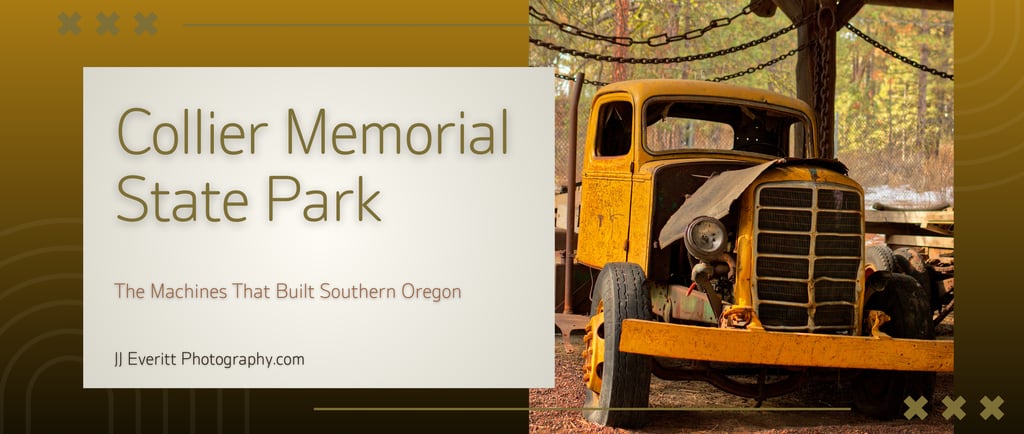
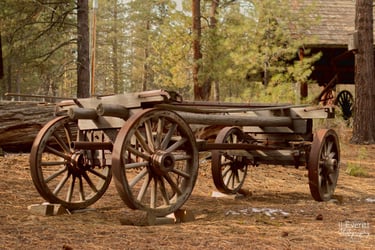
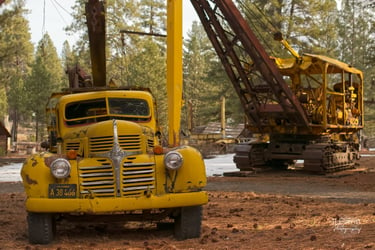
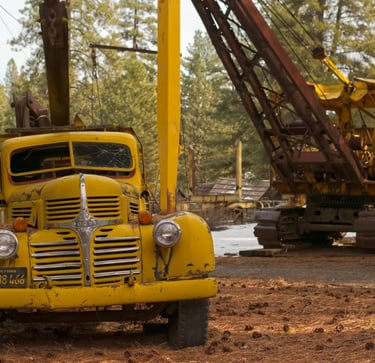
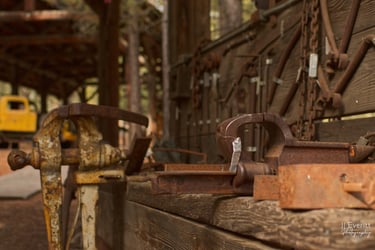
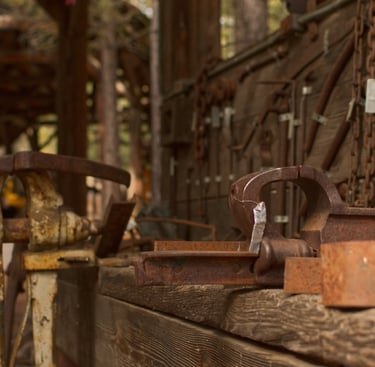
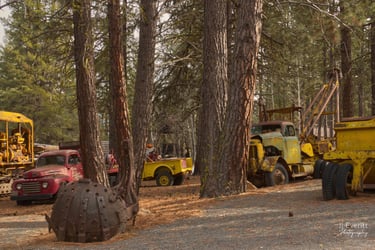
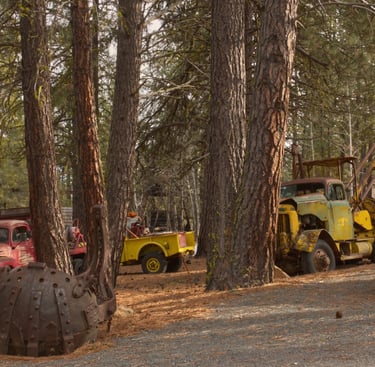
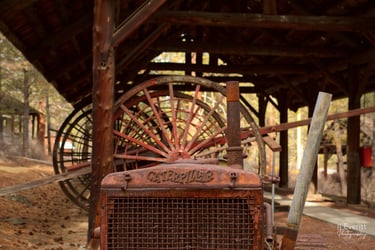
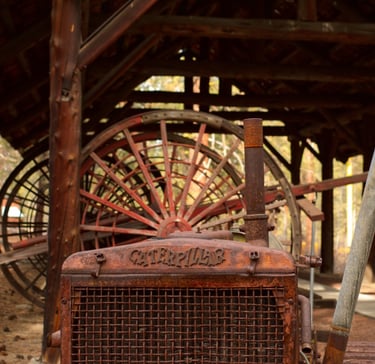
This is not the kind of place that announces itself. You park, step out into the cold, and start walking. Then the scale hits. Massive logging machines sit like they were left mid-shift decades ago. Steam-powered equipment, diesel trucks, tractors, and trailers are scattered throughout the forrest and hand tools all rest secured to a workbench.
It felt less like visiting a park and more like interrupting a paused timeline.
An Outdoor Museum That Refuses to Be Polished
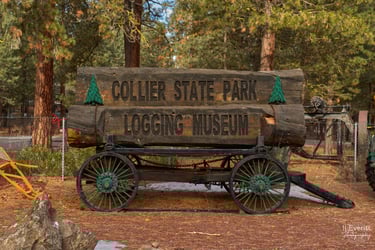
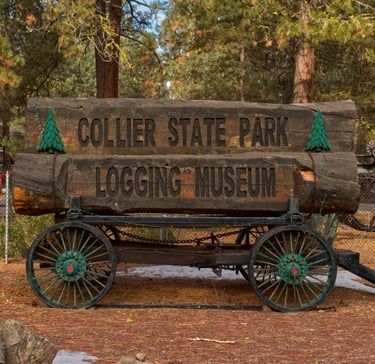
Collier Memorial State Park is one of the most complete outdoor logging museums in the country, and it does not soften the story. The machinery is real. The wear is real. Rust, dents, cracked paint, and bent steel remain untouched. These are not replicas. They are artifacts left at full scale and staged for nostalgia.
Walking the grounds, you move chronologically without realizing it. Early hand tools sit quietly near the trail. Axes, saws, and basic logging equipment remind you how much human labor once mattered.
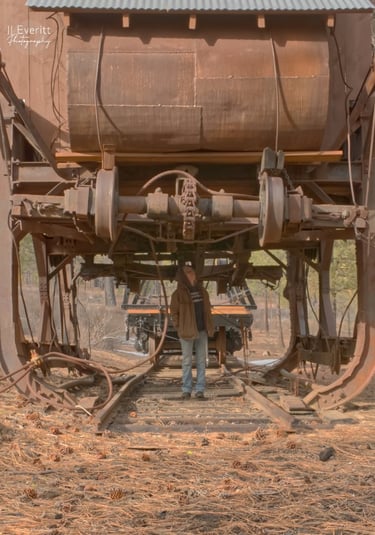
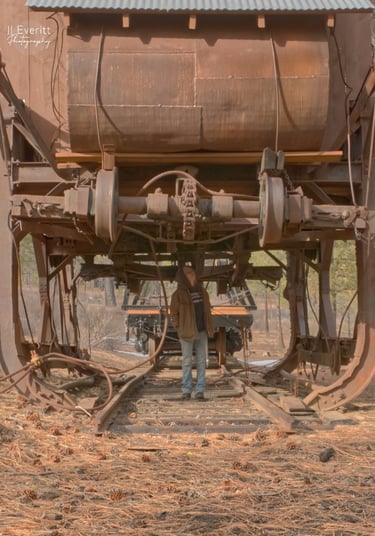
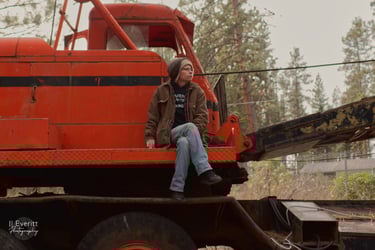
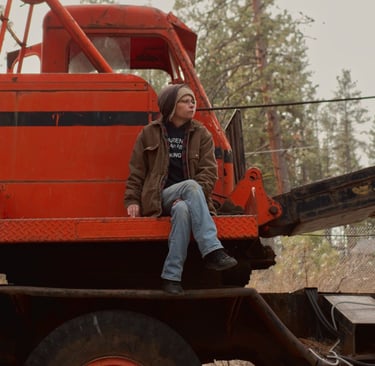
At one point, I photographed my wife standing underneath a giant skidder. The machine was built to overpower entire landscapes. The image did its job. Scale does not need explanation.
Cold Weather & Quiet Trails
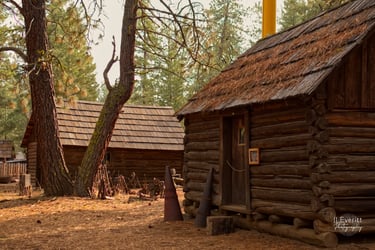
The temperature kept most people away. The gift shop was closed. Only one of the historic log cabins was open to walk through. None of that mattered. If anything, the cold sharpened the experience.
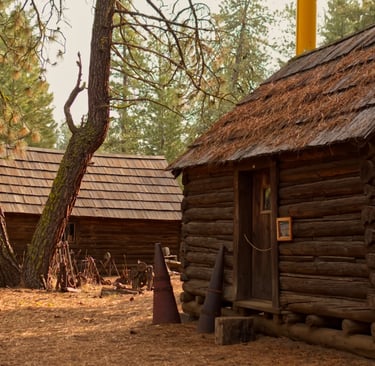
The cabins themselves are small and practical. No romantic frontier myths here. Tight rooms. Simple construction. These were spaces built for function, not comfort. Seeing them beside industrial machines creates an unavoidable contrast. Human-scale living against machine-scale ambition.
Logging was not just work. It was seasonal, uncertain, and dangerous. These cabins make that clear without saying a word.
Faces of a Working Past
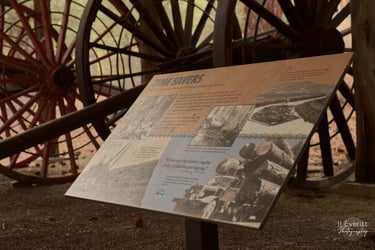
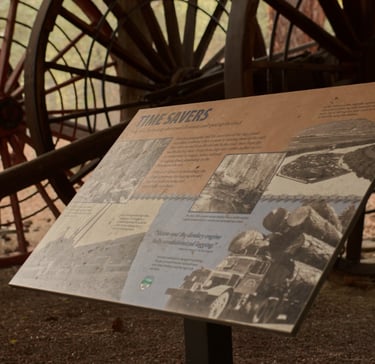
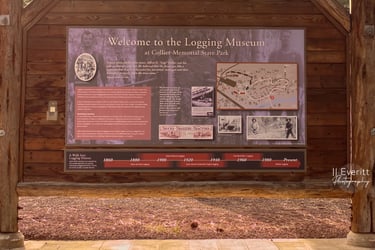
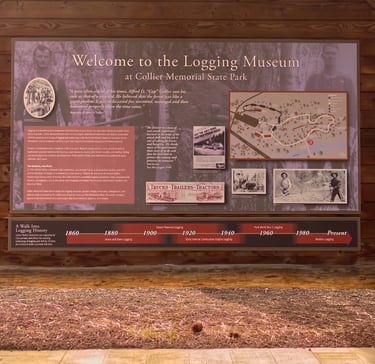
The park quietly introduces the people behind the machines. Logging families once owned this land. Their labor shaped where towns formed, how railroads were laid, and why Southern Oregon looks the way it does today. The museum fills in the context. Old photographs, diagrams, and interpretive signs explain how crews lived, worked, and adapted.
Technology evolves slowly at first. Then it accelerates. Hand tools give way to steam. Steam gives way to diesel. Efficiency increases. Output increases. Consequences follow.
What the Park Doesn’t Hide
Collier Memorial State Park does not celebrate logging blindly, and it does not condemn it either. It documents it. The environmental impact sits alongside the innovation. Increased efficiency meant increased extraction. Progress came with costs that still echo through the region.
Walking through the park connects those dots in a way books rarely do. You see how labor changed. How communities depended on timber. How technology reshaped both land and people.
When to Go and Why It’s Worth It
If you are near Klamath Falls, this is an easy and worthwhile stop. Families, history enthusiasts, photographers, and anyone curious about how Oregon became Oregon will find something here. Spring and summer would likely be more comfortable, but winter strips it down to essentials.
Cold air. Quiet trails. Machines are waiting patiently in the trees.
Collier Memorial State Park is not a postcard stop. It's something better.
You can check out the video I made on YouTube about this as well.
Sign up for my newsletter and never miss the newest blog post.
I’m Jordan, the photographer behind JJ Everitt Photography. I’m based in Klamath Falls, Oregon.
Learn more